Blepharospasm: treatment with botulinum toxin
Blepharospasm is a focal dystonia in which involuntary contractions of the eyelid muscles cause excessive blinking or forceful eye closure. In many patients, it interferes with reading, driving, work and daily life. Botulinum toxin injections are considered the main symptomatic treatment.
This page explains how treatment works, what results to expect, and when specialist assessment is important.
Book a consultation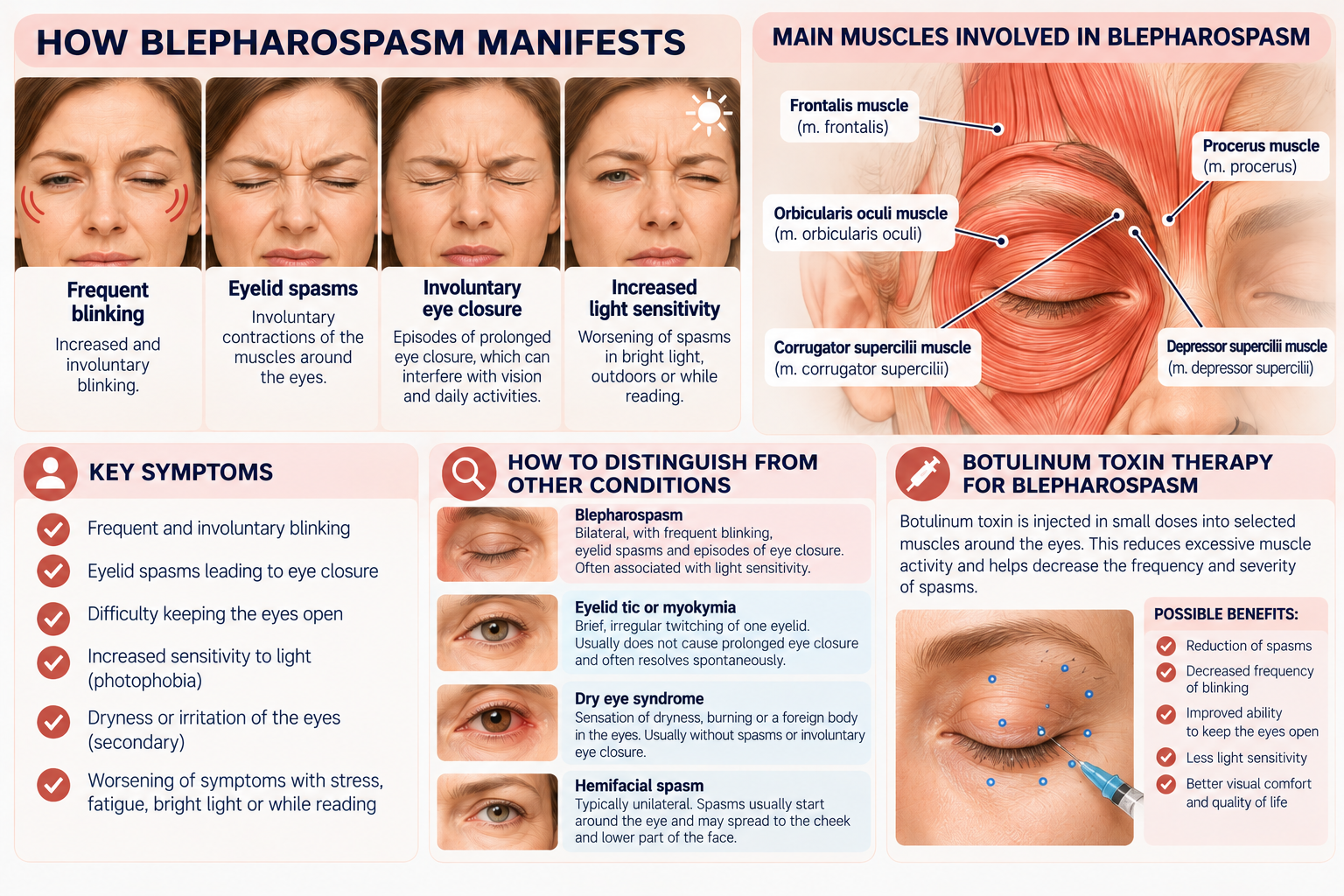
What is blepharospasm?
Blepharospasm is a form of focal dystonia affecting the orbicularis oculi and nearby muscles. Patients may notice frequent blinking, difficulty keeping the eyes open, episodes of involuntary eyelid closure, visual discomfort, and increased symptoms when tired, stressed or exposed to bright light.
In some cases, symptoms remain mild. In others, the spasms become functionally disabling and significantly limit quality of life.
Main symptoms
- frequent blinking;
- involuntary eyelid squeezing or closure;
- difficulty keeping the eyes open;
- eye irritation, dryness or light sensitivity;
- worsening with fatigue, stress, bright light or prolonged visual tasks.
Why specialist evaluation matters
Not every eyelid spasm is the same. The doctor needs to distinguish blepharospasm from hemifacial spasm, apraxia of eyelid opening, tic disorders, ocular irritation and other causes of abnormal eye movements.
Correct diagnosis is important because treatment strategy and injection pattern depend on the underlying disorder.
Why botulinum toxin is the main treatment
Botulinum toxin injections reduce excessive muscle activity by temporarily weakening overactive muscles. In blepharospasm, this is considered the first-line symptomatic treatment because it can lessen spasms, improve eye opening and restore daily functioning.
The effect is temporary, so treatment is usually repeated at regular intervals.
How treatment is planned
The injection pattern is individualized. The choice of muscles and dose depends on the exact pattern of spasms, symmetry, severity, previous response, side effects and associated features such as apraxia of eyelid opening or spread to nearby facial muscles.
In practice, individualized planning is one of the key factors behind good results.
What to expect from treatment
- The procedure is performed during an outpatient visit.
- The effect usually begins within several days.
- Maximum benefit is often reached after 1–2 weeks.
- The clinical effect commonly lasts around 3 months, sometimes shorter or longer.
- Repeated treatment is usually needed.
Response duration and optimal interval vary from one patient to another.
Possible side effects
Botulinum toxin treatment is generally well tolerated, but side effects may occur. Depending on the injection sites and dose, these may include:
- temporary eyelid drooping;
- dry eye or excessive tearing;
- blurred vision or local discomfort;
- mild asymmetry or incomplete effect.
When to seek treatment
- if blinking or eyelid closure interferes with reading, driving or work;
- if symptoms are progressing;
- if previous treatment was insufficient;
- if the diagnosis is uncertain and specialist evaluation is needed.
Frequently asked questions
Is botulinum toxin the standard treatment for blepharospasm?
Yes. For most patients with clinically significant blepharospasm, botulinum toxin injections are considered the main symptomatic treatment.
How often are injections repeated?
In many patients, treatment is repeated about every 3 months, but the interval depends on response duration and clinical pattern.
Can treatment help if the eyes close completely?
Often yes. The goal is to reduce involuntary contractions and improve functional eye opening, although the exact result depends on the individual pattern and severity.
What if previous injections did not help enough?
A review of the diagnosis, injection pattern, muscle selection and dose may be needed. In some patients, results improve after treatment is adjusted.
Consultation for blepharospasm in Israel
If involuntary eyelid closure, frequent blinking or visual discomfort affect your daily activities, specialist assessment may help clarify the diagnosis and plan further treatment, including botulinum toxin therapy when appropriate.
Book a consultation